
STORY HIGHLIGHTS
- South Florida’s wealth hub growth draws attention to Trump’s policies.
- Trump’s potential estate tax exemption extension impacts wealth planning
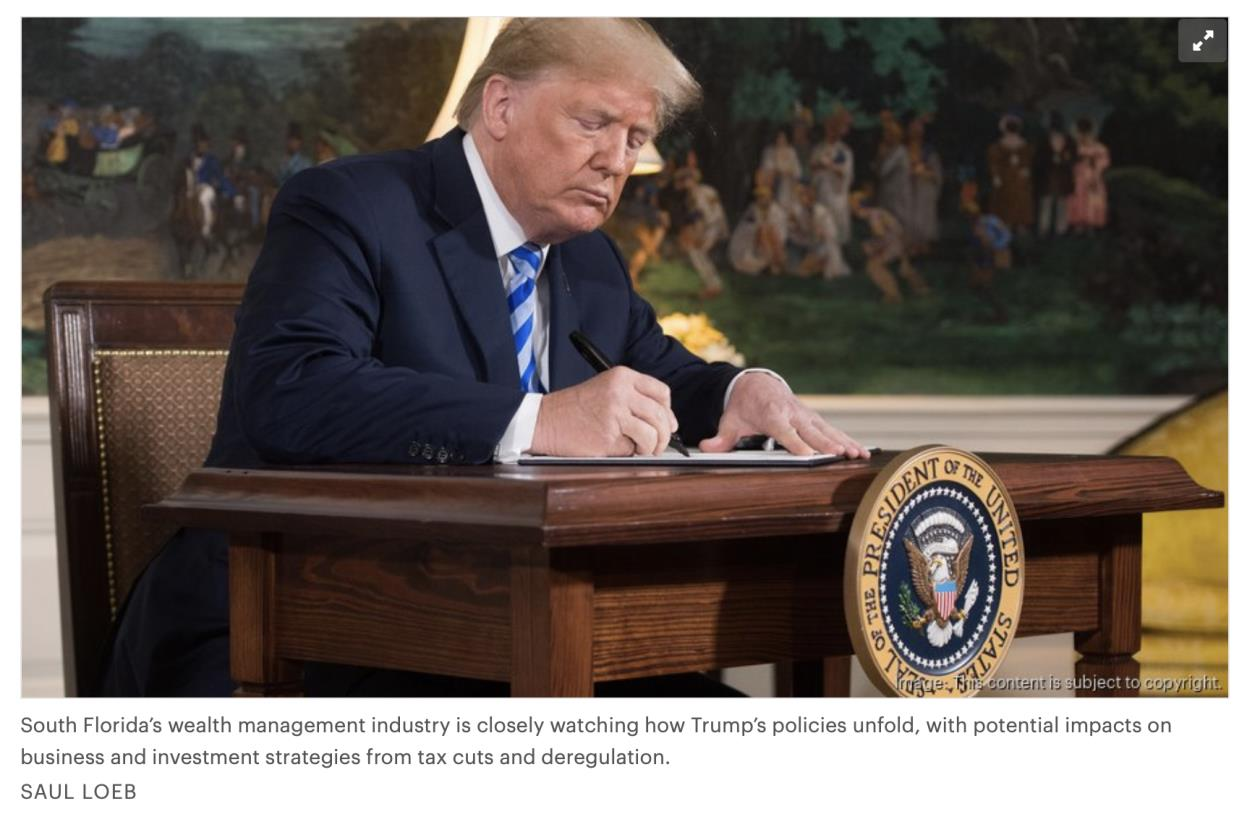
- Deregulation under Trump could boost South Florida’s financial services. South Florida’s status as one of the country’s fastest-growing wealth hubs is well documented. So, it’s no surprise that finance companies in the region await to see what President Donald Trump’s stance on a variety of issues, including tax cuts and financial deregulation, will mean for the private wealth industry’s business and clients.
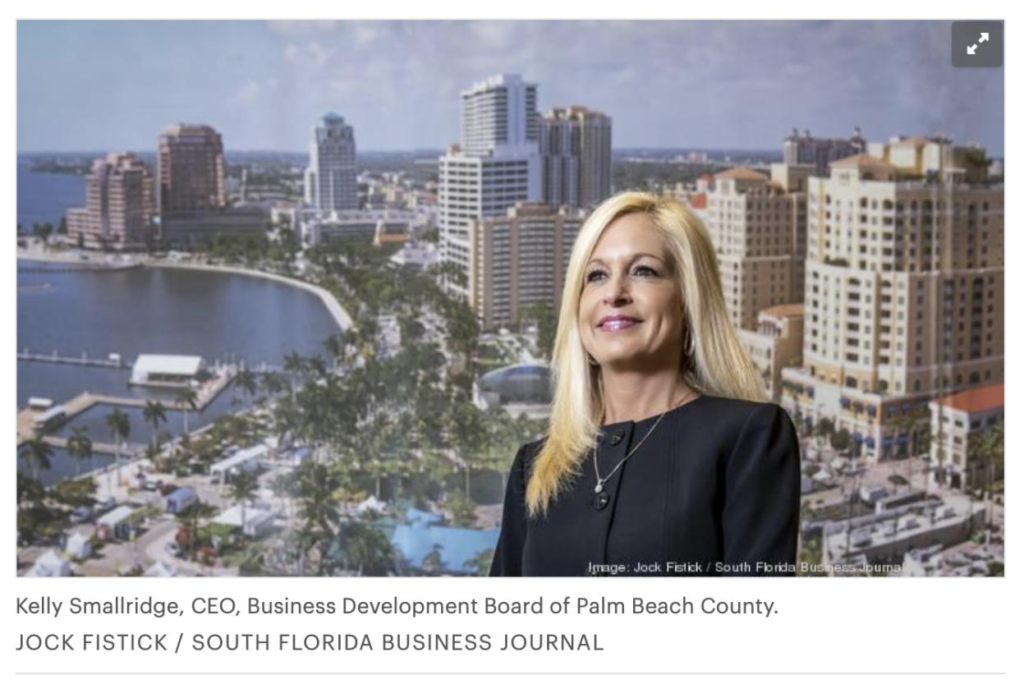
“Trump’s election is allowing us to continue the [pro-business] momentum,” said Kelly Smallridge, Palm Beach County’s Business Development Board CEO “If anything, take it to a whole new level.”
President Trump himself is an ultra-high-net-worth individual based in Palm Beach County, boasting an estimated $6.7 billion fortune, according to Forbes, and living in a grand estate dubbed the “Winter White House” on the lavish island of Mar-a-Lago.
Smallridge said that his presence in the region and the consistent visibility has elevated the county’s profile, attracting political and business leaders and some of the world’s richest people like fellow billionaires Elon Musk, Jeff Bezos and Mark Zuckerberg.
One of the most anticipated policies under Trump’s administration is the extension of the estate tax exemption, which remains highly favorable for wealthier individuals under current parameters.
With thresholds of nearly $14 million for single filers and $28 million for married couples, the exemption makes it easier for high-net-worth families to transfer up to a certain amount of their wealth without being taxed.The exemptions are set to expire Dec. 31and will revert to 2017 levels, adjusted for inflation – which would be about $7 million for individuals and $14 million for married couples. Estates valued above exemption levels may be taxed at a rate as high as 40%.
Mason Williams, chief investment officer of Coral Gables Trust, said that Trump’s presidential win has instilled a greater sense of stability in the estate planning community among CPAs and attorneys.

“If the Democrats won, it would have been this mad rush to try to get your exemption and planning done and do all the gifting that you possibly could,” he said.
But, while the expectation is for the exemption to be extended, Raul Diaz, Northern Trust’s senior regional investment officer in Miami, said it isn’t certain.
He mentioned that although the new administration supports the extension, it still needs approval from the House and Senate, which has a narrow Republican majority.

“We’ve seen already with the debt ceiling and other things that they basically need all hands on deck to agree, and that may be harder to achieve,” he said. “So likely any extension would be temporary, given the composition of Congress.”
Diaz said he is already seeing clients looking to utilize their exemptions before the year ends, and that their advisers are recommending them to do so if they can afford to given the uncertainty.
James Meany, executive managing director of Citizens Private Bank in Palm Beach, acknowledged a “wait and see” approach, but is still confident in the exemption being extended.
“It’ll be interesting to see how quickly he [Trump] moves on this [extending the estate tax exemption], but I would expect that you would see an extension of those policies, and certainly I’d be surprised if they lowered the lifetime gift exemption,” he said. When it comes to financial regulation, Trump’s administration is expected to loosen restrictions that will particularly benefit South Florida’s growing financial services companies.
“With Trump in office, expect a little bit more of a favorable playing field as far as regulation is concerned,” Williams said. “Mergers and acquisitions and private equity should do really well, as well as banking, lending, corporate finance and that whole umbrella.”
Recent JPMorgan reports said that deregulation, coupled with extending the provisions of the Tax Cuts and Jobs Act — such as the 60% bonus depreciation for company owners, the qualified business income deduction, and raising the state and local tax deduction cap limits —could be positive for the stock market and offset the potential negative growth impacts of tariffs. It could also give rise to more financial products, said Alonso Garza, Miami market manager at J.P. Morgan Private Bank.

“There would be this ability for banks to do a little more business around product offerings and services with which, historically, the law hasn’t fully caught up with, because they’re relatively new asset classes,” he said.
Garza said this flexibility would be key for firms to not only launch new offerings but also lend against those financial products.
And when it comes to more modern products, Trump just enacted the Strengthen American Leadership in Digital Financial Assets Technology executive order on Jan. 23 that will have a task force led by cryptocurrency investor and venture capitalist David Saks. The initiative aims to position the U.S. as a global leader by promoting digital currencies and creating new digital assets. Cryptocurrencies like Bitcoin, though still a decentralized financial asset without intrinsic value, experienced an exponential surge, more than doubling within a year to surpass $100,000 — much of this rally occurring after Trump’s election in November.
So while deregulation under Trump’s presidency could potentially unlock new products and services, it could also provide opportunities to capitalize on emerging trends in evolving markets.
“I think the markets have already become enthusiastic about [Trump],” Garza said.
“But, between now and the implementation of any changes, it will likely take more than just 100 days. After that time, we’ll start to see what’s being worked on, but it may t ake one to two years, or possibly even longer, before the full effects are visible.”